Why Client Onboarding Matters More Than You Think
Onboarding is the stretch between "yes, let’s work together" and the first real deliverable. Onboarding is easy to treat as admin and rush through, but it is doing a lot of quiet work. A good onboarding sets expectations, prevents scope creep before it starts, and tells the client they made the right call. A messy one does the opposite, and it colours the whole project.
The clients who refer you and come back are usually the ones who felt looked after in the first week. That is not luck. It is a process you can repeat.
The Complete Client Onboarding Checklist
The full checklist, broken into the three phases that matter: before kickoff, the kickoff itself, and the first week. Copy it, cut what does not apply to you, and run it for every new client.
✅ Proposal accepted and signed
✅ Contract signed, with scope, timeline, and payment terms
✅ Deposit invoice sent and paid
✅ Welcome email or packet sent
✅ Onboarding questionnaire or brief completed
✅ Access gathered (accounts, files, brand assets)
✅ Client record set up with their details, brief, and services
Kickoff
✅ Kickoff call held
✅ Scope, deliverables, and deadlines confirmed out loud
✅ Communication norms agreed (one channel, response times)
✅ Key contacts and decision-makers identified
First week
✅ A quick early win delivered
✅ Reporting and check-in schedule set
✅ Next milestone and its date confirmed
Before Kickoff: Get the Paperwork and Access Sorted
Most onboarding problems trace back to something skipped here. Before any real work starts, the proposal should be accepted and the contract signed, with the scope, timeline, and payment terms all in writing. Send the deposit invoice and get it paid, since a paid deposit is the clearest signal that the client is truly committed. Then send a short welcome and an onboarding questionnaire to gather the brief and the access you need (logins, files, brand assets), and set up the client’s record so everything about them lives in one place from day one.
A signed contract and a paid deposit come first
Do not start delivering before the contract is signed and the deposit is paid. Starting early feels keen, but it is the fastest way to end up doing unpaid work for a client who was never fully committed. Paperwork first, then the fun part.
The Kickoff: Align on Everything Out Loud
The kickoff call is where you turn a signed contract into a shared plan. Walk through the scope and deliverables so you both picture the same thing, confirm the deadlines, and agree how you will work together: one main communication channel, realistic response times, and who the decision-makers are. Saying all of this out loud, and then writing it down, is the cheapest insurance you can buy against misunderstandings later. If you want a client to be able to follow progress themselves, this is the moment to give them access to a client portal.
The First Week: Deliver a Quick Win
Nothing builds confidence like early momentum. In the first week, aim to deliver one small, visible thing, a mood board, a draft outline, an early wireframe, whatever fits your work. An early visible deliverable reassures the client that hiring you was right, and it gets the collaboration moving. Finish the week by confirming the check-in rhythm and the next milestone with a real date, so the project has a clear shape from the start.
How to Systematize Onboarding
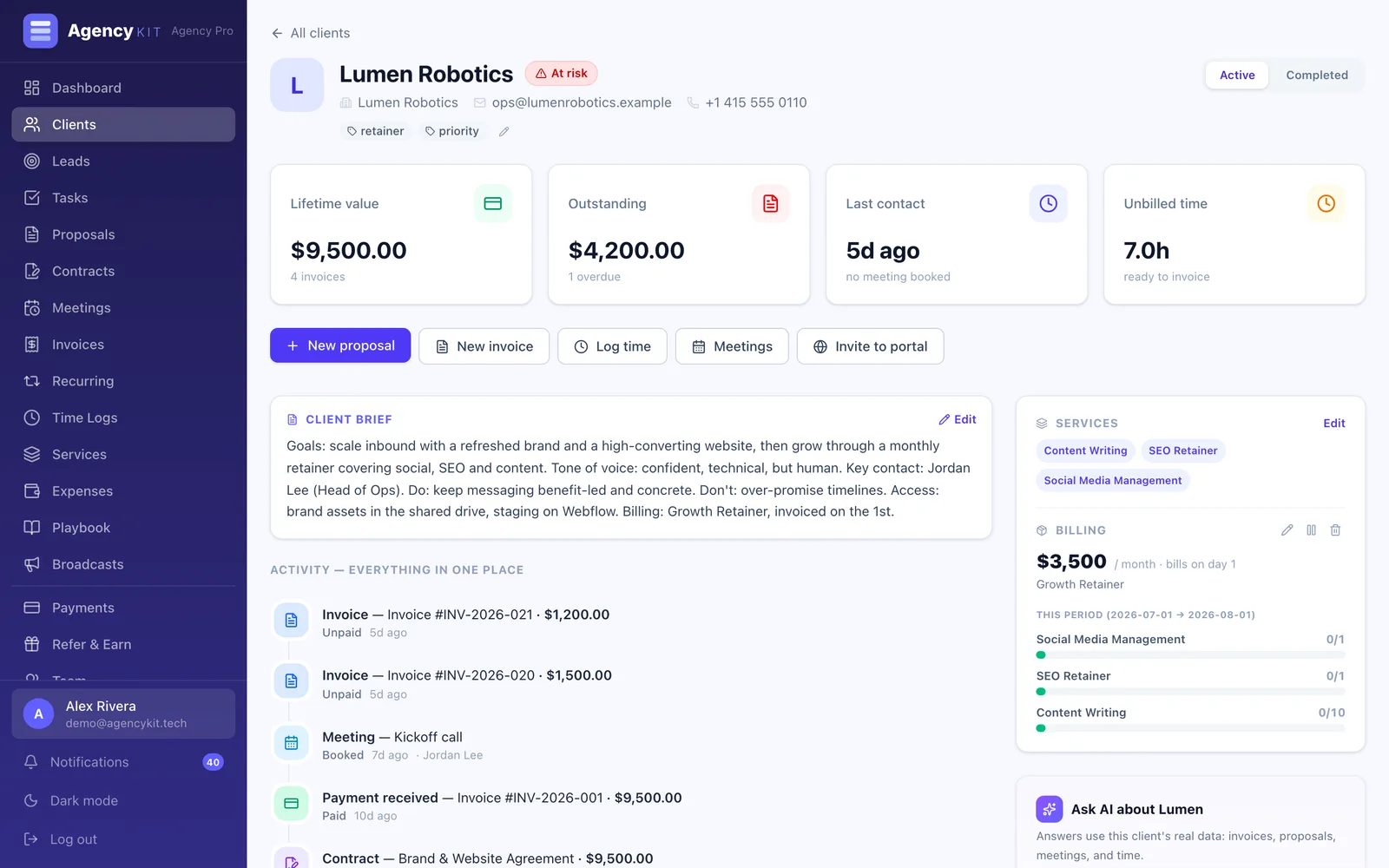
The goal is to run this same process every time without thinking about it. Running it the same way every time means templates and a single home for client information. In AgencyKit, an accepted proposal flows into a contract and a deposit invoice, and each client gets a record that holds their brief, services, billing, and full history in one place, so onboarding becomes a checklist you follow rather than a scramble you reinvent for every client. For retainer clients, a clear retainer agreement sets the monthly scope from day one.
Wrapping Up
Client onboarding is not admin to rush through, it is the foundation the whole project stands on. Get the contract signed and the deposit paid, align on scope and communication at the kickoff, deliver a quick win in the first week, and keep every client’s details in one place. Run the same checklist every time and onboarding stops being a scramble and starts being a reason clients trust you.
Two things keep an onboarded project healthy: a clear scope, so read how to stop scope creep, and getting paid, so see how to get clients to pay on time.
Client onboarding best practices
A checklist tells you what to do. Best practices decide whether doing it works, and they come from the same place most onboarding problems do, which is the gap between signing and starting.
Send something within an hour of signature. Not the full pack, just a note confirming what happens next and when. The hours right after a client commits are the ones where they are most likely to wonder whether they were right to, and silence is what turns that into a phone call.
Ask for everything once. Logins, assets, brand files, the list of who approves what. Three separate requests over two weeks reads as disorganised in a way that a single long form does not.
Name the approver before the first deliverable, not after it. The most expensive revision round in any project is the one that arrives from somebody who was not in the kickoff.
Say how fast you answer. Not to limit yourself, but because an unstated response time defaults to whatever the client imagines, which is usually faster than yours.
Book the first review at kickoff. A date in a calendar creates a rhythm; "we will check in soon" creates an inbox.
The same sequence works whether you call it client onboarding or customer onboarding. The word changes with the business model, and the failure mode does not: the client cannot see the work, so they assume it is not happening.
Key Takeaways
- Onboarding is the foundation the whole project stands on, not admin to rush. Onboarding sets expectations, prevents scope creep, and drives referrals
- Run it in three phases: before kickoff (paperwork and access), the kickoff (align on scope and communication), and the first week (deliver a quick win)
- The signed contract and paid deposit always come first, before any real work begins
- Systematize it with templates and a single client record, so onboarding is a checklist you follow rather than a scramble you reinvent
- In AgencyKit, an accepted proposal flows into a contract and deposit invoice, and each client record holds the brief, services, billing, and history in one place
Frequently Asked Questions
Client onboarding is the process of setting a new client up for a successful project, covering the stretch between them saying yes and the first real deliverable. Client onboarding includes signing the contract, taking a deposit, gathering the brief and access, holding a kickoff call, and aligning on scope and communication, so the project starts on solid ground.
Three phases. Before kickoff: proposal accepted, contract signed, deposit paid, welcome sent, brief and access gathered, and the client record set up. At kickoff: confirm scope, deliverables, deadlines, communication norms, and decision-makers. In the first week: deliver a quick win and set the reporting and check-in schedule. Running the same list every time keeps it consistent.
Systematize it. Use templates for your welcome, questionnaire, contract, and deposit invoice, and keep every client’s information in one record rather than scattered across email and folders. When an accepted proposal flows into a contract and invoice automatically, and each client has a single home, onboarding becomes a quick checklist instead of a scramble you rebuild each time.
Yes. The signed contract and a paid deposit come first, before any real work. The contract sets the scope, timeline, and payment terms in writing, and the deposit confirms the client is genuinely committed. Starting delivery before both are done is the most common way to end up doing unpaid work for a client who never fully signed on.
A welcome packet is a short document or email you send a new client at the start, setting a warm, professional tone. A welcome packet typically covers what happens next, how and when you will communicate, what you need from them, and any onboarding questionnaire. A welcome packet is a small touch that reassures the client and heads off a lot of early back-and-forth.
Because early momentum builds trust. Delivering one small, visible win in the first week reassures the client that hiring you was the right call and gets the collaboration moving. The first deliverable also sets the pace for the rest of the project. A slow, quiet first week leaves clients wondering, while a quick early result buys you goodwill.
A client onboarding workflow is the fixed sequence between a signature and the first real piece of work: countersign and file the contract, take the deposit, send the welcome note, collect brand assets and logins, run the kickoff call, and confirm who approves what. Agency client onboarding usually adds one more step, naming the day-to-day contact on both sides, because the most common cause of a slow first month is that nobody knows who to ask. Run it from the same checklist every time and the first month stops being improvised.
Reading this in Google? You can tell it to show AgencyKit to you more often.
Sources & References
- Harvard Business Review, research on client relationships and retention. hbr.org
- U.S. Small Business Administration, client and contract management guidance. sba.gov
- AgencyKit client management & portal (2026). agencykit.tech