Why Web Designers Look for a HoneyBook Alternative
Web designers sit awkwardly with HoneyBook. HoneyBook handles the front end of a project fine, the proposal and the contract, but web work has two halves that HoneyBook was not really built for: the project itself, often run by a small team, and the recurring care plan that keeps the site healthy after launch. For a designer who wants to run builds and then keep clients on monthly maintenance, HoneyBook’s booking-first, solo-creative shape starts to pinch.
The common reasons web designers look elsewhere:
- It is weak on recurring care plans. The real money in web work is post-launch maintenance retainers, and HoneyBook is built around one-off bookings.
- HoneyBook is built for solo creatives, not teams. As you add a developer or a second designer, per-tier pricing and a solo-first design get in the way.
- Availability and price. HoneyBook works in only four countries, and its entry plan rose close to 90 percent.
What Web Designers Actually Need
The right tool for a web designer covers both halves of the work:
- Project proposals and contracts that scope a build clearly, with a deposit and milestones.
- Care-plan retainers that bill automatically for hosting, updates, and support after launch.
- A client portal for approvals, so design and content sign-off happens in one place.
- Team-friendly, per-account pricing, so adding a developer does not add to the bill per seat.
The Best HoneyBook Alternatives for Web Designers
The options worth a look, with the one that covers builds and care plans first: Prices are rough and change, so confirm the current figures.
| Tool | Best for | From |
|---|---|---|
| AgencyKit | Project proposals plus care-plan retainers, portal approvals, teams | $9/month |
| Bonsai | Solo freelancers wanting proposals and invoicing | about $21/month |
| SuiteDash | Agencies wanting a client portal and white-label | about $19/month |
| HoneyBook | solo creatives in its four markets | about $29/month |
The money is in the care plan, so the tool must handle it
A web designer’s stable income comes from post-launch maintenance retainers, not one-off builds. If your tool cannot bill a monthly care plan automatically, it is missing the most valuable half of the business. Look for something that runs both the project and the recurring care plan, so every build turns into an ongoing client.
Why AgencyKit Fits Web Designers
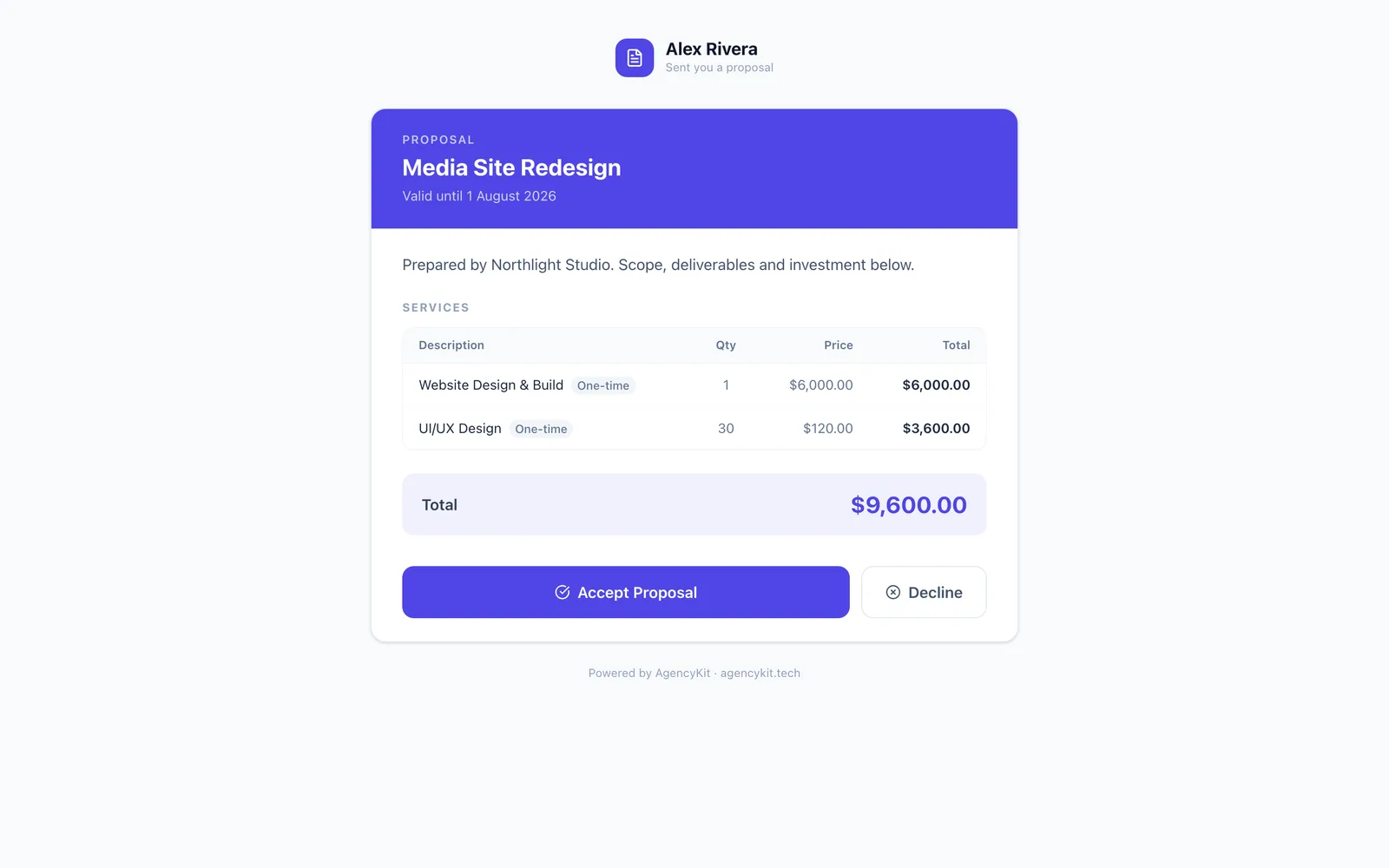
AgencyKit covers both halves of web work in one place. You scope a build with a proposal and a contract, clients approve designs in a client portal, and when the site ships you move them onto a care plan that invoices automatically. Pricing is one flat fee per account from $9 a month, so adding a developer or designer does not add per-seat costs, and it works internationally. There is a 14-day free trial. See client management software for web designers.
How to Switch
Move in order: set up your new tool, put your project templates and care plans in, start new work there, and let existing HoneyBook projects finish before you cancel. Our guides on how to switch from HoneyBook and how to cancel HoneyBook cover it step by step.
Wrapping Up
HoneyBook handles a proposal and a contract, but web work is two halves: the build and the recurring care plan that follows it, often run by a small team. A booking-first, solo-creative tool that works in only four countries leaves the most valuable half on the table. Look for something that runs projects and care plans together, with a portal for approvals and team-friendly pricing. Running projects and care plans together is where AgencyKit fits a web designer better than HoneyBook.
Key Takeaways
- Web work has two halves HoneyBook was not built for: the team-run project and the recurring care plan after launch
- The most stable web income comes from care-plan retainers, so the tool must bill them automatically
- HoneyBook is solo-focused and works in only four countries, and its entry price rose close to 90 percent
- Look for a tool that runs builds and care plans together, with a portal for approvals and per-account team pricing
- AgencyKit covers both halves, works worldwide, and starts at $9/month per account
Frequently Asked Questions
The best fit covers both halves of web work: project proposals and contracts for builds, and care-plan retainers that bill automatically after launch, plus a client portal for approvals and team-friendly pricing. HoneyBook is booking-first and solo-focused, and works in only four countries. AgencyKit runs builds and care plans together, works worldwide, and starts at $9 a month per account.
HoneyBook handles the proposal and contract stage well, but web work has two halves it was not really built for: the project, often run by a small team, and the recurring care plan that keeps a site healthy after launch. HoneyBook is also solo-focused and available in only four countries. Web designers who want to run builds and ongoing maintenance often find a better-fitting alternative.
Web designers need a tool that handles project proposals and contracts for builds, plus recurring care-plan retainers for post-launch maintenance, ideally with a client portal for approvals and team support. All-in-ones like AgencyKit and agency-focused tools like SuiteDash are common choices. The key is that the tool can bill a monthly care plan automatically, since that is where much of the stable income comes from.
Because a website is not finished at launch: software needs updating, backups need running, security needs monitoring, and small changes come up. A care plan bills a monthly fee for that ongoing work, which gives the client peace of mind and gives the designer recurring income from a project they have already delivered. A care plan is often the most valuable, most stable part of a web business.
HoneyBook is designed primarily for solo creatives, so a small web team with a developer and a designer can find its per-tier pricing and solo-first design limiting. A tool with per-account pricing, where the whole team is covered by one flat fee, and shared task and client management, tends to fit a growing web studio better than a solo-focused booking tool.
For web designers running both builds and care plans, AgencyKit fits better on the fundamentals: it handles project proposals and recurring care-plan retainers together, includes a client portal for approvals, uses team-friendly per-account pricing, and works internationally. HoneyBook is a polished tool, but it is aimed at solo creatives in its four markets booking one-off projects, which is only half of web work.
Move in order to avoid disruption: set up the new tool, add your project templates and care-plan tiers, start new work there, and let existing HoneyBook projects finish before you cancel. Export your data first. Our guides on how to switch from HoneyBook and how to cancel HoneyBook walk through the whole process so nothing in flight is dropped.
Reading this in Google? You can tell it to show AgencyKit to you more often.
Sources & References
- HoneyBook, official product and pricing pages (2026). honeybook.com
- G2 and Capterra, HoneyBook alternatives (2026). g2.com
- AgencyKit client management for web designers (2026). agencykit.tech